
With Boston Red Sox Director of Hitting Development and Program Design, Jason Ochart.
The Future of Hitting Development: Moving Beyond the Debate
Old school versus new school. Linear versus rotational. Bat speed versus contact quality.
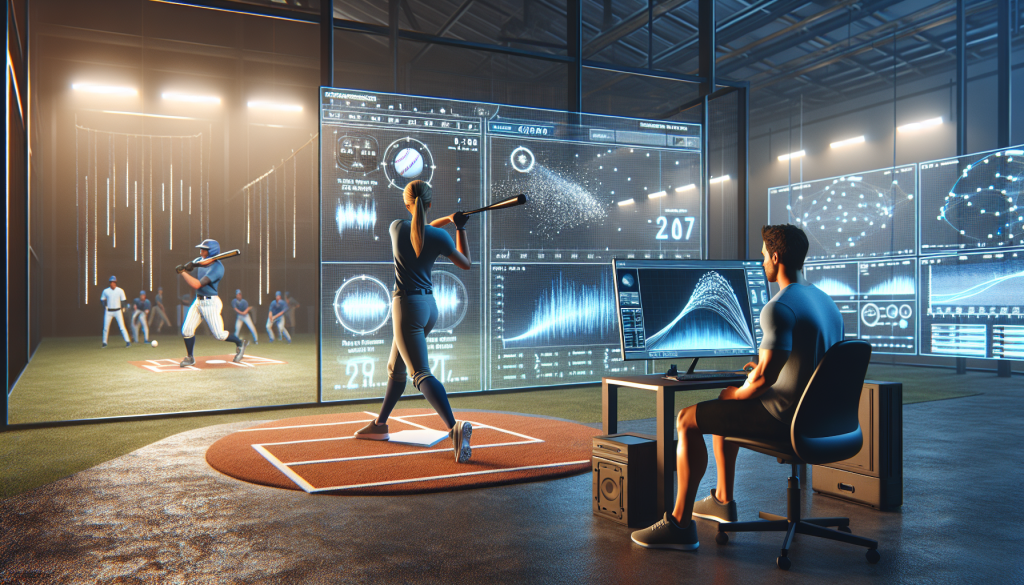
Everywhere you look online, hitting coaches are promoting their philosophies—often while dismissing the methods of others. However, there is one thing that does not have an agenda and cannot be influenced by opinion: data.
Some argue that the “nerds” have taken over baseball without truly understanding the game. Regardless of where anyone stands in that debate, one fact is undeniable: data analytics are here to stay, and the information they provide has changed how hitters are evaluated, trained, and developed.
Hitting Development and Program Design
As a former Boston Red Sox Player Development Coach, I had the opportunity to participate in hitting development and see firsthand how technology and analytics can improve training environments.
I asked Jason Ochart, the Boston Red Sox Director of Hitting Development and Program Design, the following question:
Question: When designing hitting programs for individual players, how has data analytics helped create player buy-in?
“When you can use data and facts when talking to players about their own performance and how they compare to big leaguers, it helps them buy in to your coaching. It gives them real numbers that help them understand where they stand and where they need to improve. It clearly defines ‘where they are’ and ‘where they need to be,’ and your coaching and programming should be the road between them.”
Important Takeaways
- Establish where the player currently stands.
Use objective information to help players understand their current performance and how it compares with the level they are trying to reach. - Identify specific areas for improvement.
Data can reveal swing characteristics, performance deficiencies, and opportunities that may not be obvious through observation alone. - Build the road map.
Most importantly, coaching and programming must move the player from where they currently are toward where they need to be.
Data alone does not develop hitters. The value comes from a coach’s ability to understand the information, explain it clearly, connect it to what the player is experiencing, and turn it into an effective training plan.
Technology identifies the destination. Quality coaching builds the road to get there.
The Future of Hitting Development
The next era of hitting development is already here. It combines advanced analytics, technology, skill acquisition, and individualized player-development strategies.
Data Analytics
Teams can use performance data to evaluate swing decisions, bat speed, contact quality, ball-flight outcomes, pitch recognition, and other important aspects of hitting. This information allows coaches to provide more precise feedback and design targeted interventions.
Biomechanics
Studying how a hitter moves can help coaches better understand how the athlete creates force, organizes movement, and produces consistent contact. Motion capture, force plates, and 3D analysis can provide valuable information when used within the proper context.
The goal is not to make every hitter move the same way. It is to help each player find efficient movement solutions that match their physical capabilities and performance needs.
Pitch Recognition and Swing Decisions
A hitter’s swing only matters if it is applied to the right pitch at the right time. Training pitch recognition and swing decisions is essential for improving game performance.
Virtual reality, pitch-tracking systems, randomized batting practice, and game-like training environments can help hitters recognize pitches earlier and make better decisions.
Physical Preparation and Nutrition
Strength, mobility, movement quality, sleep, nutrition, and recovery all influence a hitter’s ability to perform. Individualized strength and conditioning programs can help players improve their physical capacity while supporting durability throughout a long season.
Mental Performance
Hitting is not only a physical skill. Confidence, concentration, emotional control, preparation, and the ability to respond to failure are critical components of success.
Mental-performance training can help hitters remain present, manage pressure, and compete with a clear and consistent approach.
Equipment and Technology
Advances in ball-tracking systems, bat sensors, high-speed cameras, virtual reality, and other technologies provide coaches and players with more information than ever before.
However, technology should support the coaching process—not replace it. The value of any tool depends on how effectively the information is interpreted and applied.
Conclusion
The future of hitting development is not about choosing old school or new school, linear or rotational, bat speed or contact quality. These debates often create false choices.
Successful hitting development requires a holistic and individualized approach that combines objective data, biomechanics, movement quality, swing decisions, mental preparation, physical development, and game-like training.
Data tells us where the player is. Coaching determines where the player needs to go. Programming creates the path between the two.
The future of hitting development is already here—and it is not going anywhere.


Leave a comment